The project consisted of moving the electricity readings collected by Octopus Energy Italy from users' meters into a new, modern, scalable system.
This was my first project when I started working for Kraken Tech, the technology division of the Octopus Energy group, in 2024.
Context
Octopus Energy Italy had already been operating in the Italian retail electricity market since 2022, and its user base was growing quickly. As the number of users increased, so did the need to migrate data from the existing system to a more performant one.
In 2024, Octopus Energy had around 300,000 customers. By May 2026 we are talking about more than 1 million.
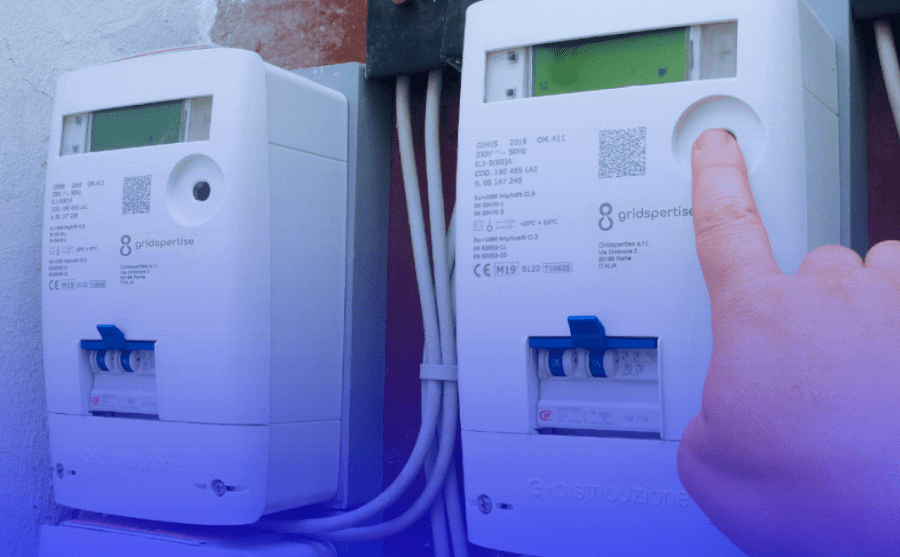
In Italy, smart meter penetration in the electricity sector is virtually total (source: EU Agency for the Cooperation of Energy Regulators). The vast majority of these meters are second-generation smart meters.
In practice, this means two things:
- consumption data for each meter is collected every day
- consumption is collected in 15-minute intervals, so 96 readings per day (also known as quarter-hourly readings)
A simple back-of-the-envelope calculation is enough to understand the amount of data being processed: if, for example, we consider 100,000 second-generation meters, that means 9,600,000 consumption readings per day. And this is for "only" 100,000 second-generation meters, a number that can be considered low for large operators.
Also, the processes that use this data are quite critical: customer bills, consumption forecasting, and electricity settlement (comparing the energy actually withdrawn from the grid, purchased energy, measurements, imbalances, and adjustments).
In short, this is not the classic management platform where, if something goes wrong, you create a couple of indexes, hit it with a hammer a few times, and call it a day.
The Integrated Information System, SII
Data is collected from meters through the interaction with the Integrated Information System (SII).
In short: the different distributors deposit the data on a server, and the different market operators (Octopus Energy, in this case) collect it and process it in their own systems.
Daily meter consumption is also collected almost entirely through the SII integration.
Once processed, the data becomes available for use. From a customer's point of view, this mainly means bills and consumption data, in the Personal Area or in the app.
The challenges
As mentioned above, the data is used by central system processes, especially bill generation.
This meant we had to keep a decidedly conservative approach: the new system and the existing one had to coexist.
The main problem, however, is that, as often happens, two different systems do not reason in the same way, and there is not always a 1:1 comparison or mapping for what gets done.
This also introduced organizational complexity, because communicating with a non-technical audience became fundamental:
- gathering information about the processes
- understanding the reasoning behind operational procedures
- communicating benefits and trade-offs
All of this while making sure the system continued to work as required and that data was processed consistently.
A few points of credit for Italy
Before closing the article, I want to pause on a few small things Italy deserves credit for.
The SII is a centralized system, under the control of the regulator (ARERA), and it provides access to distributors' reading data from a single source. It is a much simpler model than the one used in other countries: France and the UK have central hubs, but they are not exactly a single system, while in Germany or Austria there is no central entity at all.
In addition, smart meter coverage in Italy is virtually total, and we have done much better than many European countries.
To give an idea (same source mentioned above, end-2024 data):
- Italy: virtually total
- France and Spain: almost like Italy
- Austria: ~80%
- UK: ~62%
- Belgium: ~35%
- (Germany is reported at 1%, but I think some specific considerations should be made for our German friends)
Conclusions
Beyond the work needed to expand and stabilize data processing, I was very happy to lead this initiative. From the start, I had the opportunity to move a new project forward at Kraken/Octopus, with practical impact.
In the end, the project was completed successfully, although with some compromises.